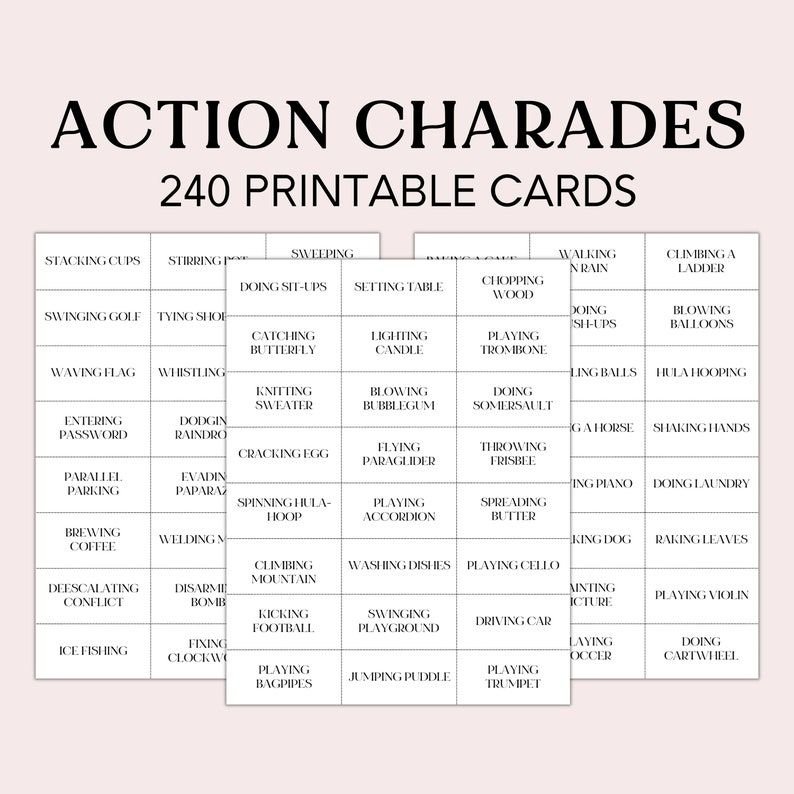
Transforming a simple game into an unforgettable family experience is easier than you think, especially when it comes to the timeless fun of Charades. But let's be honest, playing the traditional version with little ones can sometimes lead to more confusion than cheer. That's why we're diving deep into Charades Variations and Twists for Kids, designed to inject fresh energy, endless laughs, and guaranteed engagement into your next game night.
Forget the rigid rules and high-stakes competition; for kids, Charades is about creative expression, teamwork, and making memories. This guide will equip you with all the insights and imaginative modifications you need to tailor the game perfectly for any age group, ensuring everyone from toddlers to pre-teens is eager for their turn in the spotlight.
Charades for Kids: At a Glance
- Simplify to Engage: Adapt words, phrases, and rules to match your child's age and developmental stage.
- Focus on Fun, Not Flawlessness: Emphasize participation and creative effort over perfect guessing or strict scoring.
- Prepare Thoughtfully: Pre-select familiar categories and write out age-appropriate phrases on individual cards.
- Flexibility is Key: Be ready to adjust rules, offer hints, or swap cards if a child is struggling.
- Embrace Variations: Explore different ways to play, like Reverse Charades or Themed Rounds, to keep the game fresh.
- Beyond Entertainment: Recognize the hidden benefits – from boosting communication skills to fostering creativity.
The Ageless Appeal of Charades, Kid-Style
At its heart, Charades is a guessing game where players act out a word or phrase without speaking, while their team tries to guess it. It’s a concept that’s simple enough for almost anyone to grasp, but when you bring kids into the mix, a few traditional elements need a gentle revamp.
Traditionally, the opposing team knows the phrase, adding a layer of competitive strategy. For kids, especially younger ones, this can slow things down and create waiting times. Our recommendation? Forgo the opposing team knowing the phrase. Instead, only the actor knows it, allowing all players a turn and keeping the game flowing. This makes it a more collaborative, "free-for-all" style where everyone can shine.
Getting Started is Simple:
- Divide into Teams (or Not): For younger children, a collaborative "everyone guesses" approach works best. For older kids, two teams can add a fun, friendly competitive edge.
- Prepare Your Phrases: Write words or short phrases on separate slips of paper. Fold them up and toss them into a bowl or hat.
- The Actor's Turn: One person silently picks a slip, reads it (or has it read to them), and then acts it out within a set time limit.
- The Guessing Game: Their teammates (or everyone) shout out guesses.
- Score (or Don't): You can assign a point for each correct guess, or simply play until all the cards are used, celebrating every successful guess as a collective win.
The real magic happens when you move beyond these basic steps and start customizing.
Tailoring Charades for Every Age and Stage
The beauty of Charades lies in its adaptability. You can fine-tune nearly every aspect to fit the attention spans, vocabulary, and motor skills of your specific players.
Tiny Tots (Under 3)
For the youngest participants, traditional Charades can be a big ask. Their focus might be short, and complex actions tricky.
- Keep it Simple, Super Simple: Stick to their favorite toys, beloved cartoon characters, or very basic actions they see every day (sleeping, eating, running, jumping).
- Focus on Guessing: They might prefer to be the guessers rather than the actors. Encourage them to point, make sounds (if you allow them), or try to mimic the action.
- Picture Perfect: Instead of words, draw simple pictures on the cards. A stick figure sleeping, a rough outline of their favorite teddy bear – visual cues work wonders.
Preschool & Early Elementary (3-6)
Slightly older children are ready for more interaction, but still need plenty of scaffolding.
- Action-Oriented Words: Actions are still king. Think "brushing teeth," "eating a banana," "hopping like a bunny." Animals with distinct movements are also great (lion roaring, monkey swinging).
- Familiar Characters: Dora the Explorer, Paw Patrol, Mickey Mouse – characters from their favorite shows or books are excellent choices.
- Extra Time & Hints: Don't be strict with the timer. Allow extra time if they're close, or permit a teammate to offer a single verbal hint if the actor is really struggling.
- "Free For All" Style: This age group benefits immensely from everyone getting a turn and everyone being allowed to guess. It minimizes complaints and keeps everyone engaged.
Elementary & Pre-Teens (7-12)
This is where Charades truly shines! Kids in this age range can handle more complexity and enjoy a bit of friendly competition.
- Diverse Categories: Branch out into books, movies, video games, sports, and more complex objects or places.
- Introduce Universal Gestures: Teach them the basic charades signals:
- Number of Words: Hold up fingers for the number of words in the phrase.
- Category: Point to your ear for a song, twirl your finger for a movie, pretend to read for a book, etc.
- Sounds Like: Tug your ear.
- Small Word: Hold thumb and forefinger close together.
- Long Word: Stretch arms apart.
- Correct Guess: Nod vigorously, point to the guesser.
- Team Play: Introduce scoring and team dynamics. Keep the timer fair and consistent.
- Complex Phrases: "Floating down a river," "solving a mystery," "building a sandcastle" – multi-word phrases become a fun challenge.
General Adaptations for All Ages
No matter the age group, these tips will smooth out gameplay and boost the fun factor.
- Adjust Word Difficulty: For younger kids, stick to one or two-syllable words. For older kids, increase the difficulty with longer words, more abstract concepts, or well-known idioms.
- Support Non-Readers: If some players can't read, read the card aloud to them privately, whisper the word, or use picture cards as mentioned earlier.
- Match Familiar Experiences: When choosing phrases like book titles or movies, ensure the guessers are likely to be familiar with them. There's nothing more frustrating than trying to guess something you've never heard of.
- Clarify the "No Talking" Rule: From the start, emphasize that the actor cannot speak, mouth words, or make any noise. This is the core rule that makes Charades, well, Charades!
- Set a Time Limit (or Don't): A timer (e.g., one minute) keeps the game moving and prevents a single turn from dragging. If the word isn't guessed in time, the actor reveals it, and you move on. For very young kids, you might skip the timer entirely to reduce pressure.
- Score or Collaborate? Decide upfront if you're playing competitively (assigning points) or cooperatively (the goal is simply to guess all the words). Collaborative play often works best for mixed-age groups or when the focus is purely on fun.
- Adapt Rules Freely: This is your game night! If a rule isn't working, change it. The goal is engagement and enjoyment, not strict adherence to a rulebook.
Beyond the Basics: Creative Charades Variations and Twists for Kids
Once you've mastered the fundamentals, it's time to unleash the full potential of Charades with exciting variations. These twists keep the game fresh and can even highlight different skills.
1. Reverse Charades
This is a fantastic twist, especially for energetic groups. Instead of one actor and many guessers, it's the opposite: one guesser, and many actors!
- How it Works: The guesser closes their eyes or leaves the room. The remaining players are shown a word or phrase. When the guesser returns, everyone acts out the word or phrase simultaneously, while the single guesser tries to figure it out.
- Why Kids Love It: It's incredibly chaotic and hilarious. Kids love the collective effort and the surprise of seeing everyone acting at once. It takes the pressure off a single actor.
2. Themed Rounds
Inject focus and creativity by dedicating rounds to specific themes.
- How it Works: Before each round, announce a theme (e.g., "All Disney Movies," "Only Animals," "Things You Do Before Bed"). All cards for that round must fall under the theme.
- Why Kids Love It: It narrows the focus, making guessing easier and acting more specific. It's a great way to explore categories your kids are passionate about, like everything from their favorite superheroes to a generator full of kids charades ideas.
3. Emotion Charades
A powerful way to explore feelings and non-verbal communication.
- How it Works: Phrases are emotions (e.g., "happy," "sad," "angry," "scared," "excited," "confused"). The actor must convey the emotion through facial expressions and body language alone.
- Why Kids Love It: It's an expressive outlet and helps them recognize and understand different feelings in others.
4. Sound Effect Charades (Use with Caution!)
While traditional Charades is silent, allowing limited non-verbal sounds can open up new possibilities, especially for younger kids.
- How it Works: The actor can make animal noises, vehicle sounds, or other non-verbal sound effects related to the phrase, but no actual words or humming.
- Why Kids Love It: It's often easier for younger kids to make a "moo" sound than to act out a cow abstractly. It adds another layer of playful communication.
- Caution: Set clear boundaries to avoid it turning into a talking game.
5. No-Hands Charades
A hilarious physical challenge that forces actors to be extra creative.
- How it Works: The actor must act out the phrase without using their hands at all!
- Why Kids Love It: It's incredibly funny to watch people try to convey complex ideas using only their torso, legs, and facial expressions. Great for older kids who enjoy a challenge.
6. One-Word-Hint Charades
When the clock runs out, but the team is so close.
- How it Works: If the team doesn't guess the phrase in time, the actor is allowed to say one single word as a hint. The team gets one final guess attempt.
- Why Kids Love It: It offers a second chance and can be incredibly satisfying when that one word unlocks the mystery.
7. Picture Charades
For your littlest artists and non-readers.
- How it Works: Instead of acting, the player draws the word or phrase on a whiteboard or large piece of paper without speaking. Think Pictionary, but with Charades rules.
- Why Kids Love It: It caters to different learning styles and is perfect for children who might be shy about acting but love to draw.
8. Story Charades
Turns a simple phrase into a mini-narrative.
- How it Works: Instead of just one word or phrase, the card contains a very short sequence of events, like "a dog chasing a cat" or "a bird building a nest." The actor has to act out the entire story.
- Why Kids Love It: It encourages more elaborate acting and storytelling, stretching their creative muscles.
9. Lightning Round Charades
For when you want quick, energetic fun.
- How it Works: Each player gets only 15-30 seconds per card. If it's not guessed, move to the next actor immediately. The goal is to get through as many cards as possible in a set timeframe (e.g., 5 minutes).
- Why Kids Love It: The fast pace keeps energy high and minimizes any potential for boredom. It's great as a warm-up or a quick filler game.
10. Team Story Charades
A truly collaborative effort for multi-word phrases.
- How it Works: For a longer phrase (e.g., "The lion roared loudly at the zebra"), each word is on a separate card. Team members take turns acting out one word each, sequentially, to build the full phrase.
- Why Kids Love It: It requires communication and coordination within the team, making it a wonderful exercise in collective problem-solving and shared success.
Crafting the Perfect Charades Cards: Categories That Spark Joy
The phrases you choose are the heart of the game. For kids, familiarity is paramount. Nothing deflates enthusiasm faster than an actor trying to convey something the guessers have no frame of reference for.
Here's a detailed breakdown of categories and example entities, always keeping age-appropriateness in mind:
- Activities/Actions (Best for preschoolers & younger children): These are always winners because they're easy to mimic.
- Examples: Sleeping, Brushing teeth, Running, Eating, Thinking, Jumping, Singing, Dancing, Swimming, Reading, Climbing.
- Animals (Best for youngest children, common ones): Focus on animals with distinct sounds or movements.
- Examples: Lion, Dog, Cat, Monkey, Elephant, Bird, Fish, Frog, Snake, Horse, Bunny.
- Cartoon Characters (For older kids familiar with specific shows): Ensure universal recognition among players.
- Examples: Dora the Explorer, Scooby-Doo, Spider-Man, Mickey Mouse, SpongeBob, Peppa Pig, Bluey, Minions.
- Cartoons & TV Shows (For slightly older kids): Can be challenging if the theme song isn't act-able, so pick shows with iconic characters or plots.
- Examples: Sesame Street, Paw Patrol, Teenage Mutant Ninja Turtles, Rugrats, Cocomelon, Blue's Clues.
- Children's Movies (Always a hit for elementary ages): Animated films are usually easiest to act out.
- Examples: Frozen, Finding Nemo, Toy Story, The Lion King, Moana, Encanto, Trolls, Cars, Shrek.
- Popular Songs (If musically inclined and known by all): Focus on songs with iconic dances or strong lyrical imagery.
- Examples: Uptown Funk, Twinkle, Twinkle Little Star, Baby Shark, Happy (Pharrell Williams), Let It Go.
- Books (For school-aged kids/readers): Stick to well-known titles and characters.
- Examples: Harry Potter, Charlotte's Web, Charlie and the Chocolate Factory, Winnie the Pooh, The Cat in the Hat, The Very Hungry Caterpillar.
- Video Games (For older kids who game): Characters or simple actions from games are best.
- Examples: Mario Kart, Minecraft, Super Mario, Pokémon, Animal Crossing, Roblox.
- Objects (For older children): Familiar objects that are easy to distinguish and act out.
- Examples: Chair, Book, Ball, Toothbrush, Bicycle, Umbrella, Computer, Phone, Spoon.
- Places (For older kids, abstract concepts are harder): Stick to very common, recognizable places.
- Examples: Home, School, Park, Beach, Zoo, Store, Doctor's Office.
- Disney (A broad category for all things Disney): Can encompass movies, characters, songs.
- Examples: Cinderella, Buzz Lightyear, Sleeping Beauty's Castle, "Hakuna Matata."
- Food (Common food items): Easy to pretend to eat or prepare.
- Examples: Apple, Pizza, Ice Cream, Banana, Burger, Carrot, Cake.
- Sports (For older kids): Movements are key here.
- Examples: Soccer, Swimming, Basketball, Running, Gymnastics, Baseball, Hockey.
- Seasonal (Christmas/Halloween/Easter): Holiday-themed items; avoid words made too easy by costumes already being worn.
- Examples: Building a snowman, Decorating a tree, Trick-or-treating, Hunting for eggs.
Need hundreds more ideas instantly? Check out our Kids charades ideas generator to kickstart your game night planning!
Common Charades Challenges and How to Solve Them
Even with the best intentions, game night can hit a snag. Here's how to gracefully navigate common kid-related Charades hurdles.
- "I don't know what to act!" (The Deer-in-Headlights Moment):
- Solution: Offer gentle suggestions for how they might act it out. "What does a monkey do?" or "Can you show me how you'd look if you were sleeping?" Allow them to swap the card for a new one if they're truly stuck. The goal is participation, not frustration.
- "It's not fair!" (The Complaint Heard 'Round the House):
- Solution: For younger kids, emphasize the collaborative aspect. "We're all playing together, trying to guess!" For competitive games, ensure turns and phrases are roughly equivalent in difficulty. Remind them that sometimes a word is just harder than another, and it's part of the game.
- "We ran out of ideas!" (The Silence After the Guessing Storm):
- Solution: Always have more cards than you think you'll need. If you've gone through them all, take a quick break, brainstorm new ideas together, or use an online phrase generator to replenish your stash.
- "It's taking too long!" (The Waning Attention Span):
- Solution: Implement (or shorten) a strict timer. Switch to Lightning Round Charades. If a phrase is clearly going nowhere, let the actor reveal it and move on quickly. Simpler phrases also lead to quicker guesses.
- Shy Actors:
- Solution: Start with Reverse Charades so everyone acts at once, reducing individual pressure. Or, let them be the guesser first to observe others. Pair them with an older sibling or adult who can "co-act" with them initially.
The Hidden Benefits: Why Charades is More Than Just a Game
Beyond the laughter and lighthearted competition, Charades offers a treasure trove of developmental benefits for children. It's a playful disguise for powerful learning.
- Develops Non-Verbal Communication and Social Skills: Kids learn to convey meaning without words, observing body language, facial expressions, and gestures. This boosts empathy and their ability to "read" others.
- Fosters Creative Thinking: From inventing an action for "building a castle" to showing "sadness," Charades forces children to think on their feet and come up with imaginative solutions. It's problem-solving in motion.
- Helps Build Character and Teamwork: For older kids, competitive Charades teaches good sportsmanship. For all ages, it reinforces the idea that working together (acting and guessing) leads to shared success. It can also teach patience and the discipline of sticking to rules.
- Provides Family Fun, Reduces Stress, and Boosts Mood: In a world filled with screens, Charades offers a valuable opportunity for unplugged, face-to-face interaction. Laughter is a fantastic stress reliever, and shared positive experiences strengthen family bonds and create lasting memories.
Ready to Roll? Your Next Steps for Epic Family Game Nights
Armed with these Charades Variations and Twists for Kids, you're more than ready to transform your next family gathering into a hub of giggles, creativity, and connection.
Start by gathering your supplies: some slips of paper, a pen, and a bowl. Then, discuss with your kids which variation sounds most exciting. Don't be afraid to experiment, combine twists, and most importantly, remember to keep the atmosphere light and supportive. The ultimate goal isn't perfect acting or flawless guessing, but simply enjoying the shared experience. So, pick a card, cue the imagination, and let the games begin!